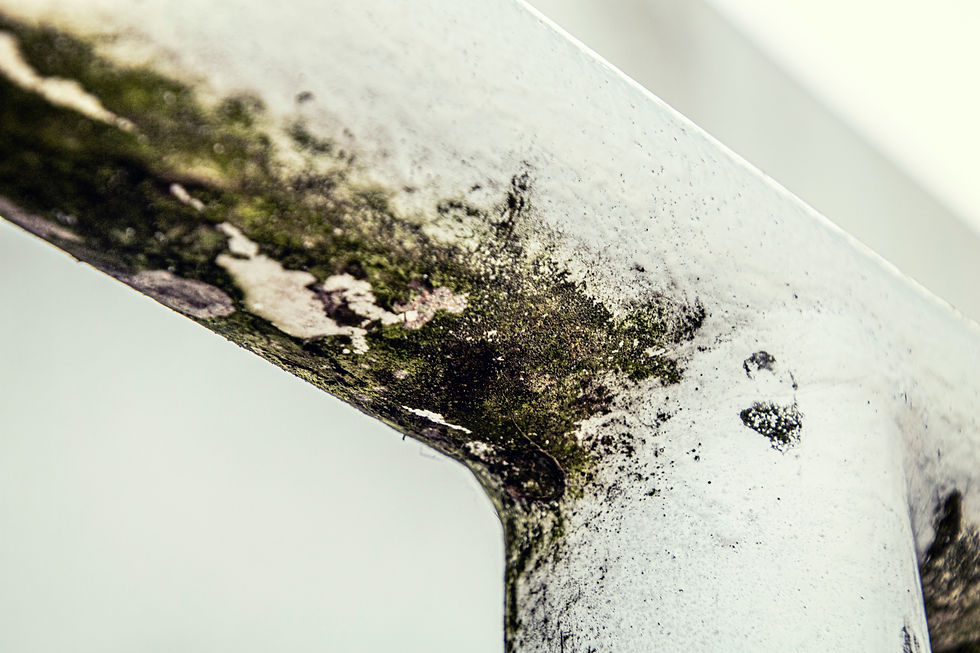
Different Kinds of Mould and How to Identify Them

Mould is a common problem in homes and buildings, and understanding the different types can help you identify and address issues before they become serious. Here's a comprehensive guide to the most common types of mould and how to recognize them.
1. Aspergillus/Penicillium

Aspergillus and Penicillium are among the most common indoor moulds. They often appear together and share similar characteristics.
It typically appears as fuzzy or powdery growth in shades of green, blue, yellow, or white.
It's often found on walls, insulation, paper products, fabrics, and food items and thrives in damp areas with poor ventilation!
Aspergillus and Penicillium can cause allergic reactions, respiratory issues, and in some cases, more serious infections in immunocompromised individuals.
2. Stachybotrys (Black Mould)

Often called "black mould," Stachybotrys Chartarum is one of the most concerning types of household mould.
It appears dark greenish-black with a slimy or wet texture. Can also appear powdery when dry.
It commonly grows on materials high in cellulose, such as drywall, wood, ceiling tiles, and cardboard and requires consistent moisture to thrive.
Stachybotrys produces mycotoxins that can cause severe respiratory problems, chronic fatigue, headaches, and neurological symptoms with prolonged exposure.
3. Mildew

Mildew is a surface mould that's easier to treat than other types but should still be addressed promptly.
Appears as flat, powdery patches. Downy mildew starts yellow and turns brown, while powdery mildew is white or grey.
Mildew is commonly found in bathrooms, kitchens, windowsills, and anywhere with high humidity. Often found on shower curtains, grout, and fabric.
It generally causes milder symptoms including coughing, headaches, and throat irritation.
4. Cladosporium

One of the most common outdoor moulds that frequently finds its way indoors.
It appears olive-green to brown or black with a suede-like texture.
Commonly grows on fabrics, carpets, under sinks, and in HVAC systems. Can thrive in both warm and cold conditions.
Cladosporium can trigger allergies and asthma, and may cause skin, eye and sinus infections.
5. Alternaria

The most common allergenic mould, often appearing after water damage.
It is dark green or brown with a velvety texture and hair-like filaments.
It's commonly found in showers, bathtubs, below leaking sinks, and areas with water damage - and it spreads quickly.
It is a major cause of allergic reactions and can worsen asthma symptoms significantly.
6. Chaetomium

Often found in water-damaged buildings and has a distinctive musty odour.
Starts white or grey, then changes to olive, brown, or black as it matures. Has a cotton-like texture.
Commonly found on drywall, wallpaper, baseboards and carpets in water-damaged homes.
It can cause skin and nail infections and may produce mycotoxins harmful to health.
Final Statement
While many moulds exhibit distinctive traits, it is nearly impossible to accurately identify the type solely by appearance. Testing is essential to confirm the specific type of mould present in your environment.
Preventative Measures
Keep indoor humidity levels below 50%
Fix leaks and water damage within 24-48 hours
Ensure proper ventilation in bathrooms and kitchens
Use exhaust fans and dehumidifiers
Regularly inspect areas prone to moisture
If you suspect a mould problem in your home, it's always best to consult a professional mould inspector for proper identification and remediation recommendations.